Define the job geometry first
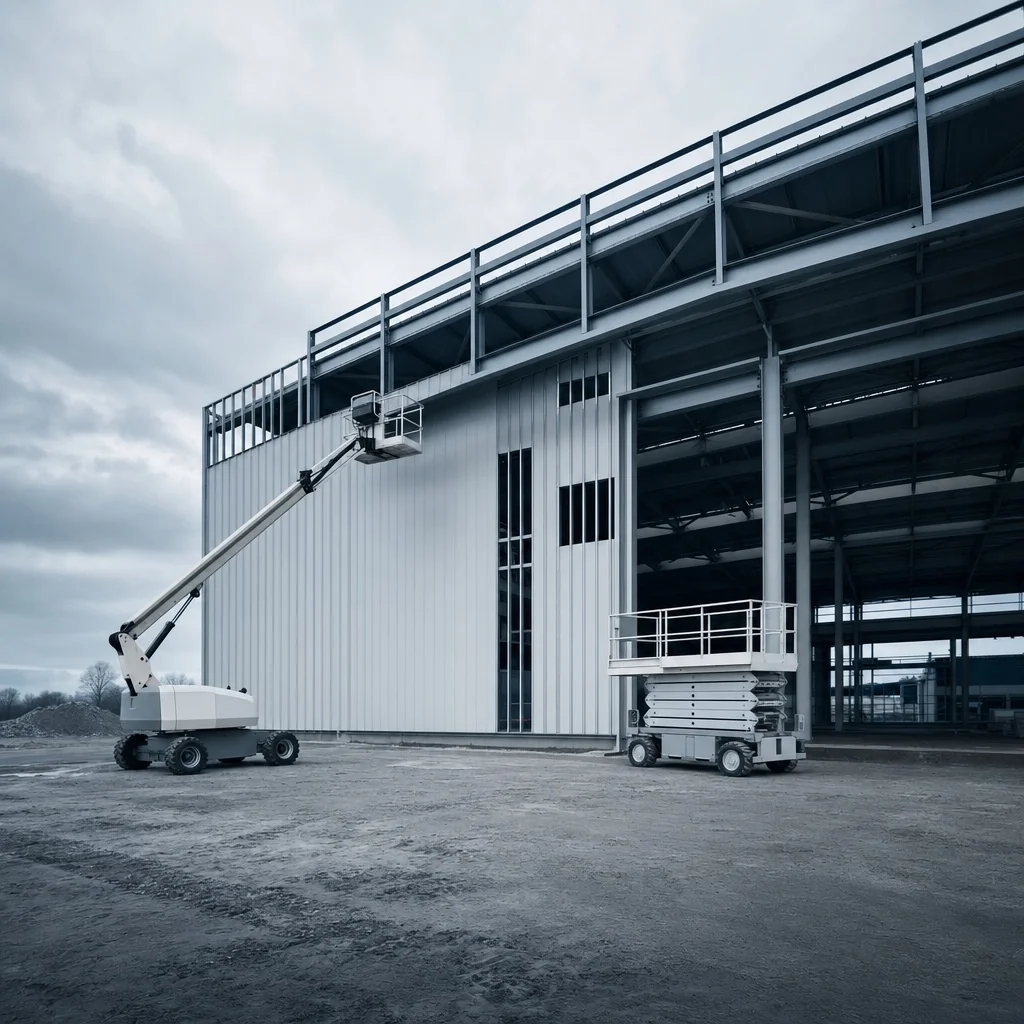
- Can the machine sit below the task with a straight vertical lift, or is outreach needed? If outreach is required, compare boom lifts under the broader aerial lift category.
- What is the working height and platform capacity requirement? Narrow aisles and sensitive floors often point to electric scissor lifts; unfinished exterior pads and utility corridors lean toward rough-terrain scissors.
How Fort Wayne conditions change the comparison
- Warehousing and distribution buildings around the city commonly have smooth slab floors and long runs between pick faces. Non-marking tires, tight turning, and low stowed heights keep traffic moving.
- Downtown retrofits and industrial site work can involve uneven substrates, temporary access mats, and seasonal mud. Rough-terrain suspension, treaded tires, and higher ground clearance become relevant when the subgrade won’t support slab machines.
- Winter brings freeze and thaw that can soften aggregate bases around new construction. Confirm surface bearing capacity and drainage before choosing a slab unit for exterior work.
Narrow by access and floor rating
- Door and elevator dimensions decide whether a unit can reach interior mezzanines or mechanical rooms. Measure clear height, width, and turning space at pinch points.
- Floor loading matters in older structures and on new decks. Lighter electric platforms spread load differently than larger outdoor units.
When to step outside the scissor category
- If the work requires reaching over conveyors, racking, or roof edges, consider articulating or telescopic booms. Articulating sections help in tight urban alleys; straight booms suit open sites.
Related categories
Local note on seasonality
Expect wet shoulder seasons. Plan for stabilized approaches and staging if exterior tasks can’t move indoors during thaw or extended rain.