Where vertical masts fit the local picture
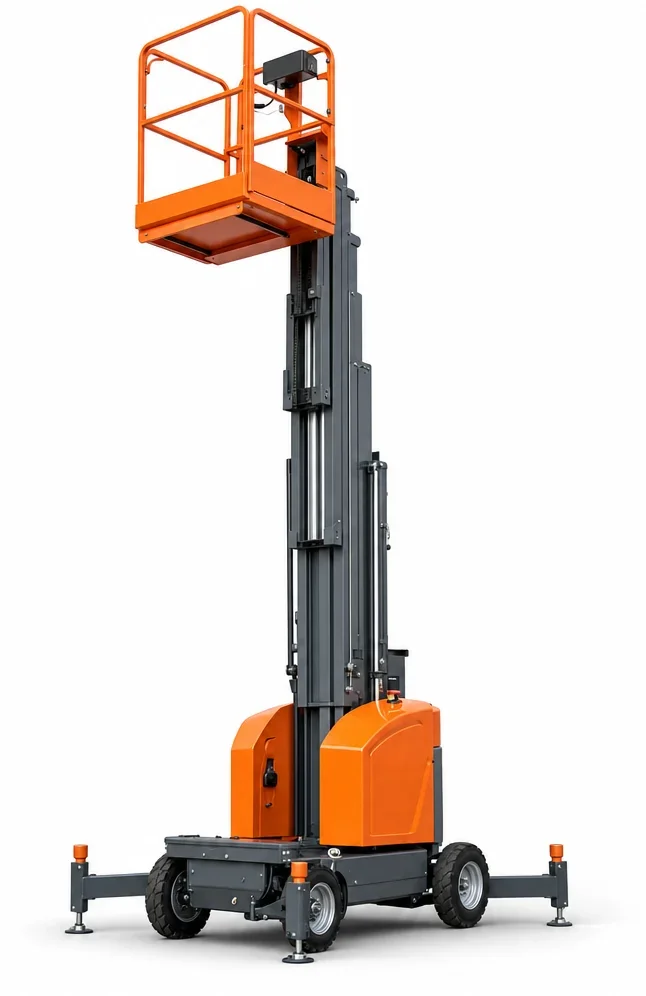
In Fort Wayne’s distribution buildings and updated production spaces, maintenance often happens around conveyors, racking, and mezzanines. When the task is directly overhead and space is tight, a mast lift reduces aisle disruption compared to larger platforms. If the job requires reaching up and then out over obstacles, consider an articulating boom instead.
Conditions and constraints
Regional precipitation brings moisture through docks and entries, but indoor slabs generally support mast lifts well when kept clean and dry. Confirm slab condition at joints and transitions between old and new floors in renovated buildings. For outdoor work or uneven approaches, a rough-terrain scissor or boom lift may be more appropriate.
Measurements that refine the choice
- Door height/width and any pinch points en route to the work area
- Aisle width and turning radius at the task location
- Task height and any overhead obstructions like cable trays or ductwork
- Floor finish requirements and non-marking needs
- Platform capacity relative to tools, fixtures, and replacement parts
Comparing categories
- Straight-up work in slightly wider aisles: electric scissor lifts
- Up-and-over geometry around obstacles: articulating booms
- Exterior or uneven slab tasks: rough-terrain scissors or telescopic booms
Actual conditions, the selected unit’s instructions, and site procedures govern elevated work.