Map the standing position and route-in
- Can the machine sit directly below the work, or do obstacles demand outreach? If outreach is needed, review boom lifts.
- Identify the softest segment of the approach. The weakest link—sod, aggregate, or thawing fill—sets the requirements for traction and ground clearance.
Fort Wayne site factors
- The regional climate brings precipitation that lingers on unpaved areas. Subgrades near waterways and low-lying tracts can stay saturated, especially during shoulder seasons.
- Large industrial sites blend temporary access roads with new foundations. Plan for grade transitions, ruts, and staging on compacted areas.
Platform and capacity planning
- Wider decks support trades working side-by-side. If materials move with the crew, deck extension length and rated capacity become key constraints.
- Confirm gate style and deck height relative to cladding or glazing lines to reduce repositioning.
When a slab unit won’t do
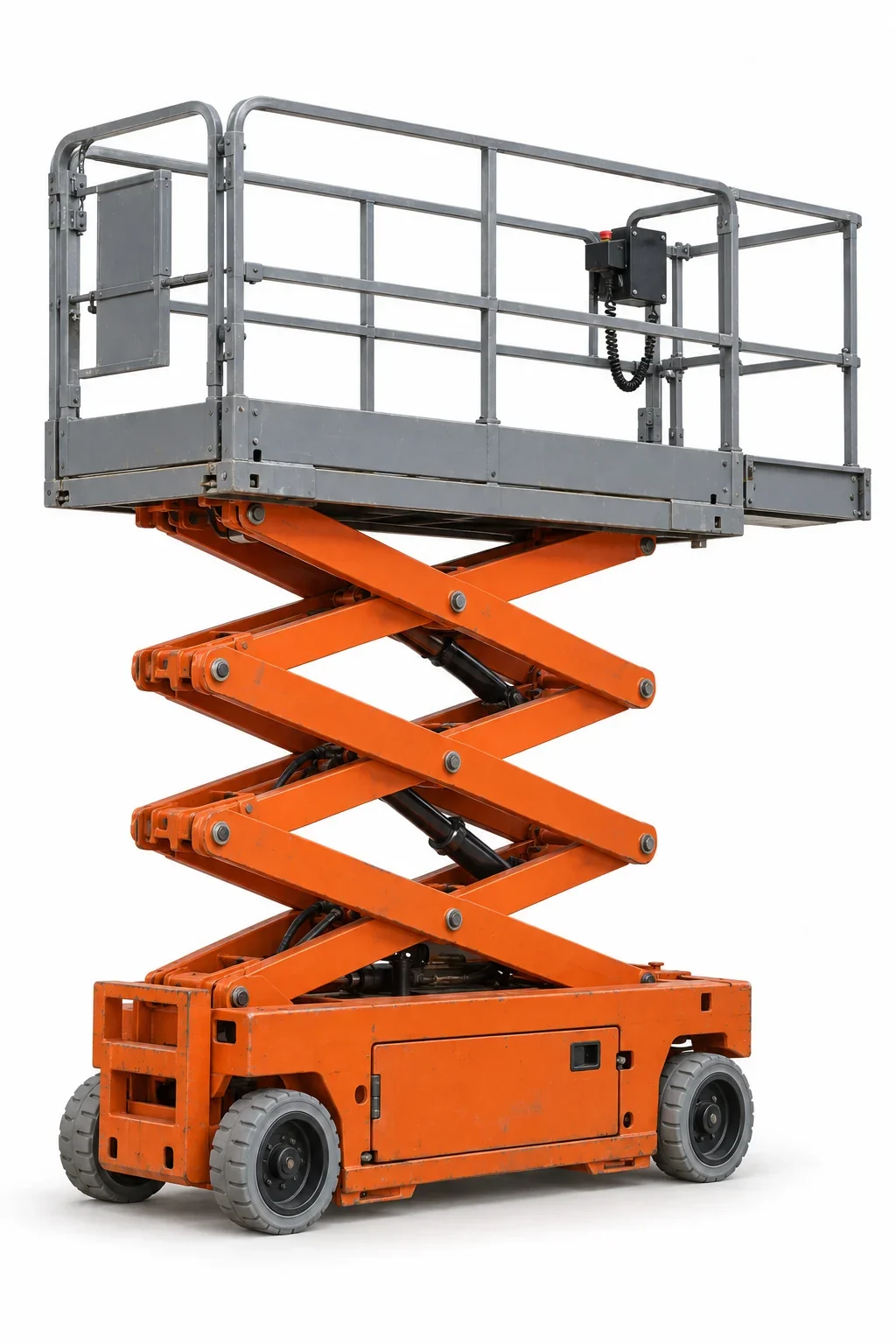
- If tires are sinking, the approach includes ruts, or grades change quickly, a slab scissor risks bogging down. Rough-terrain models handle uneven ground within their rating, but actual conditions, the unit’s instructions, and site procedures govern exterior or elevated work.
Related categories
Nearby-community work
Projects in surrounding towns often involve rural parcels and drainage ditches. Expect softer shoulders and plan the route with that in mind.