Placement geometry and movement paths
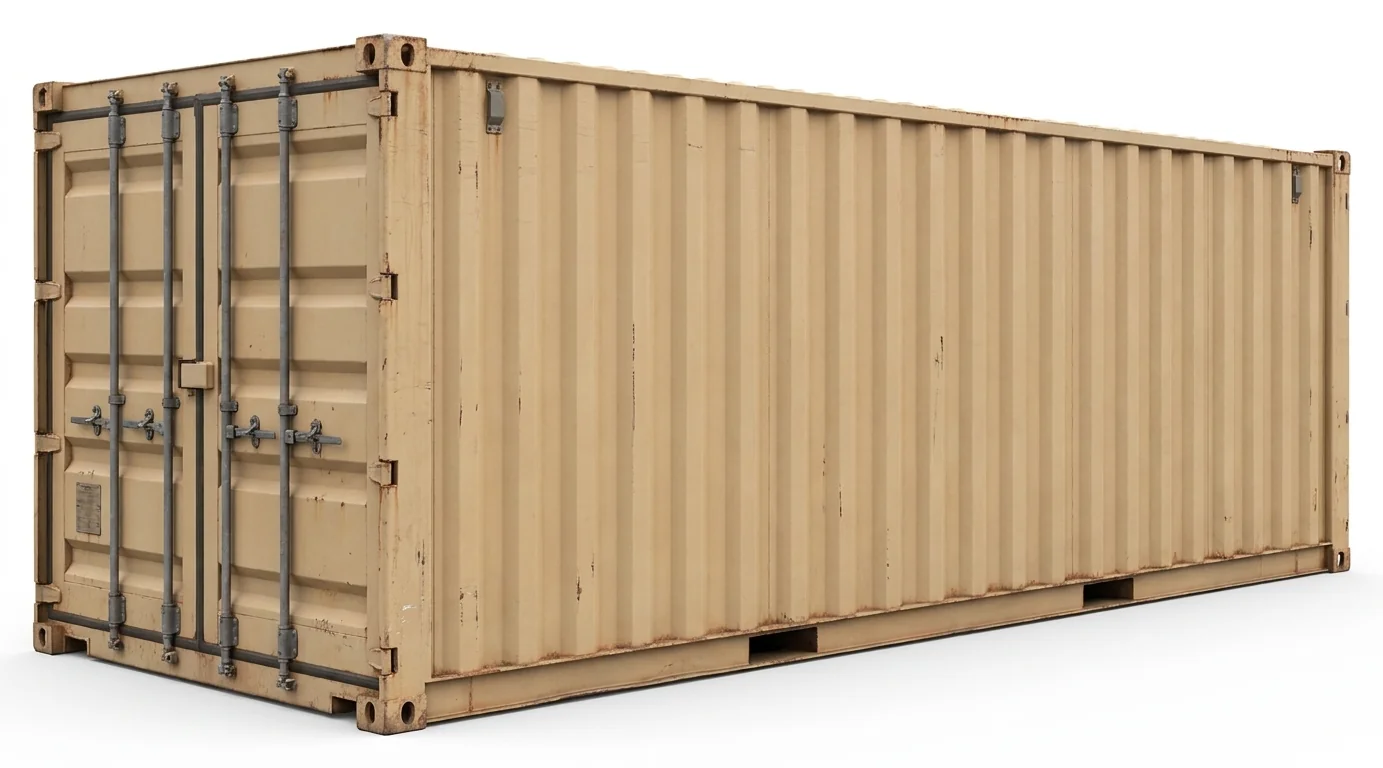
Decide whether the container should sit close to receiving docks, near scaffold access, or in a central yard. On active distribution properties, the container often needs to align with forklift routes without narrowing truck lanes. In downtown infill areas, tight alleys and temporary fencing may limit door clearance and require straight-line placement for loading.
- Measure available length and width, including door swing or ramp space.
- Check vertical clearance near canopies, utility drops, and site lighting.
- Plan the material flow: pallets, long conduit, or crated equipment each prefer different door orientations.
Ground conditions and seasonality
Fort Wayne’s regional climate frequently leaves topsoil soft. Containers concentrate weight on corner castings, so soft or uneven ground can twist doors and stress frames. Paved or compacted pads reduce binding during freeze-thaw cycles. In winter, drifting snow can block door tracks; in wet months, ponding in front of the doors slows access.
Security, ventilation, and interior organization
Industrial sites and high-bay warehouses often need separate spaces for high-value tools versus bulk consumables. Ventilation choices depend on the mix of materials. Shelving and partitions affect usable volume and how quickly crews can retrieve items during night work.
Access, equipment, and coordination
Confirm the delivery path for tilt-bed trucks: turning radii, overhead clearance, and gate widths. If materials must be staged at height, coordinate with /forklift-rental/ or /telehandler-rental/ for lift capacity and reach. For mezzanine or indoor stocking, compact lifts from /electric-scissor-lift-rental/ or /vertical-mast-lift-rental/ can assist with light parts placement.
Site procedures control use
Container siting and loading are governed by site rules, ground conditions, and the equipment’s specifications. Reassess after heavy rain, thaw, or snow events to keep doors functional and routes clear.