Map the load, run length, and siting space
Portable power planning in Fort Wayne begins with location. Can the generator sit below the task with a clear cable route, or must it sit farther away on firm ground? Long runs across wet or uneven surfaces introduce voltage drop and trip risks at crossings. Indoors, power needs in distribution aisles or maintenance bays usually favor smaller units with cleaner exhaust strategies and protected cord routes.
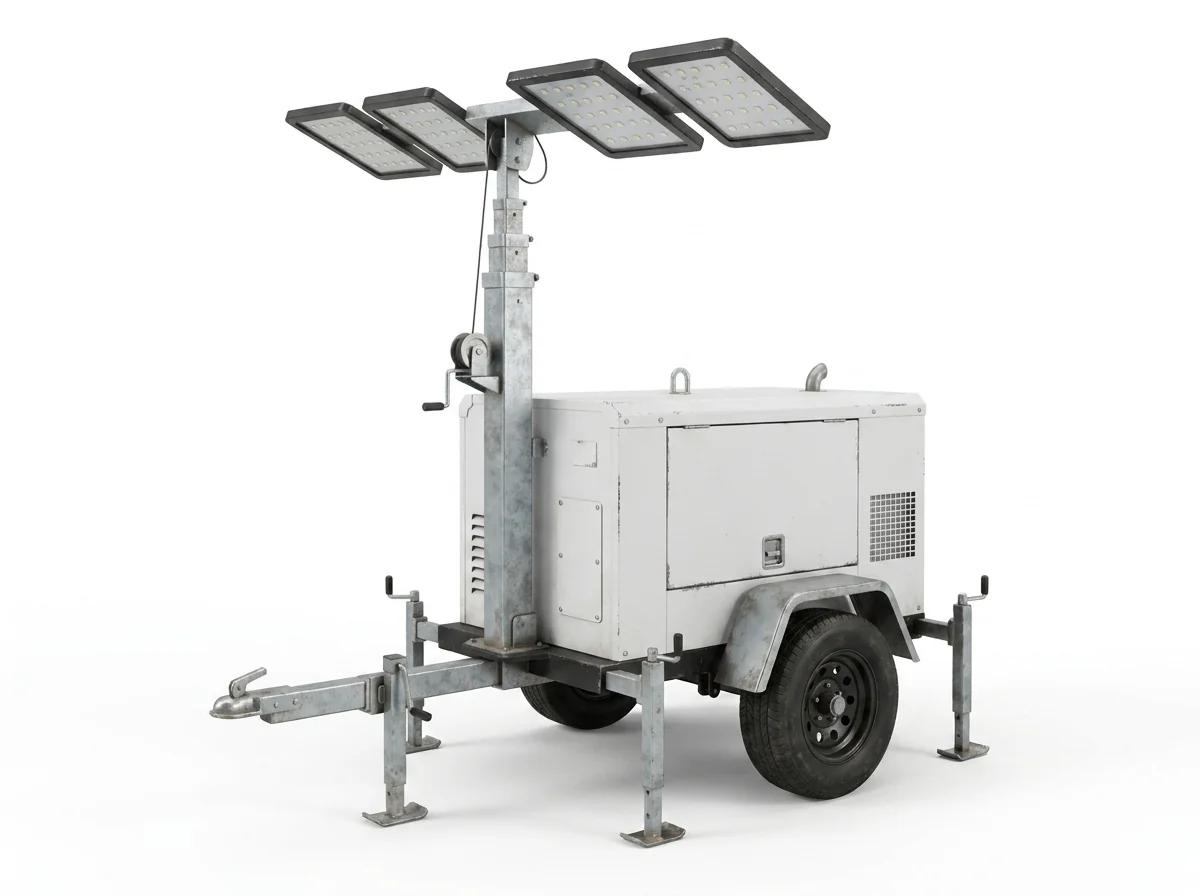
For light towers, confirm where the mast can safely stand and how the beam needs to cover work faces. On downtown redevelopment sites, light often has to clear scaffold lines and temporary fencing while avoiding spill into neighboring areas. In wide outdoor laydown yards, uniform coverage matters more than point brightness.
Local surface and weather factors
- Soft or poorly drained soils after rain or melt can limit where a trailer generator or light tower can be staged. Plan for firm approaches, level pads, and verified clearance for outriggers or stabilizers.
- In winter, cold starts, fuel gelling risks, and wind exposure change sizing and runtime assumptions. Sheltered placements can protect equipment but may restrict airflow.
- In high-bay logistics buildings, non-marking tires, compact footprints, and quiet operation reduce disruption during second-shift work.
Output, distribution, and light pattern
- Power: Note total kW/amps, motor starting currents, and whether loads are sensitive electronics or mixed construction tools. Sensitive devices in data and technology work areas often require tighter power quality.
- Distribution: Identify panel location, cord lengths, and any crossings of active forklift routes. Overhead cable trays in warehouses may reduce floor clutter but require lift access; see /electric-scissor-lift-rental/ or /vertical-mast-lift-rental/ for planning those reaches.
- Lighting: Compare mast height to target plane, beam type, and shadows from steel, racks, or scaffold. For sprawling outdoor work, multiple towers spaced to overlap can reduce glare hotspots.
Access routes and related equipment
Confirm the tow vehicle path, turning radius, and gate widths at industrial sites. Temporary barriers and staging lanes can pinch access during peak activity. Where lighting needs follow elevated tasks, coordinate with lifts: outdoor envelope work may align with /rough-terrain-scissor-lift-rental/ or /boom-lift-rental/, while indoor maintenance usually pairs with /electric-scissor-lift-rental/.
Site control and procedures govern
Outdoor lighting and power setups are influenced by changing weather, ground conditions, and site traffic. Actual conditions, the selected unit’s instructions, and site procedures govern placement, fueling, and runtime checks.