Scissor lifts: indoor slab vs. outdoor terrain
- Electric scissor lifts: Best for indoor slab work in high-bay logistics and maintenance aisles where non-marking tires, compact dimensions, and quiet operation matter. See /electric-scissor-lift-rental/.
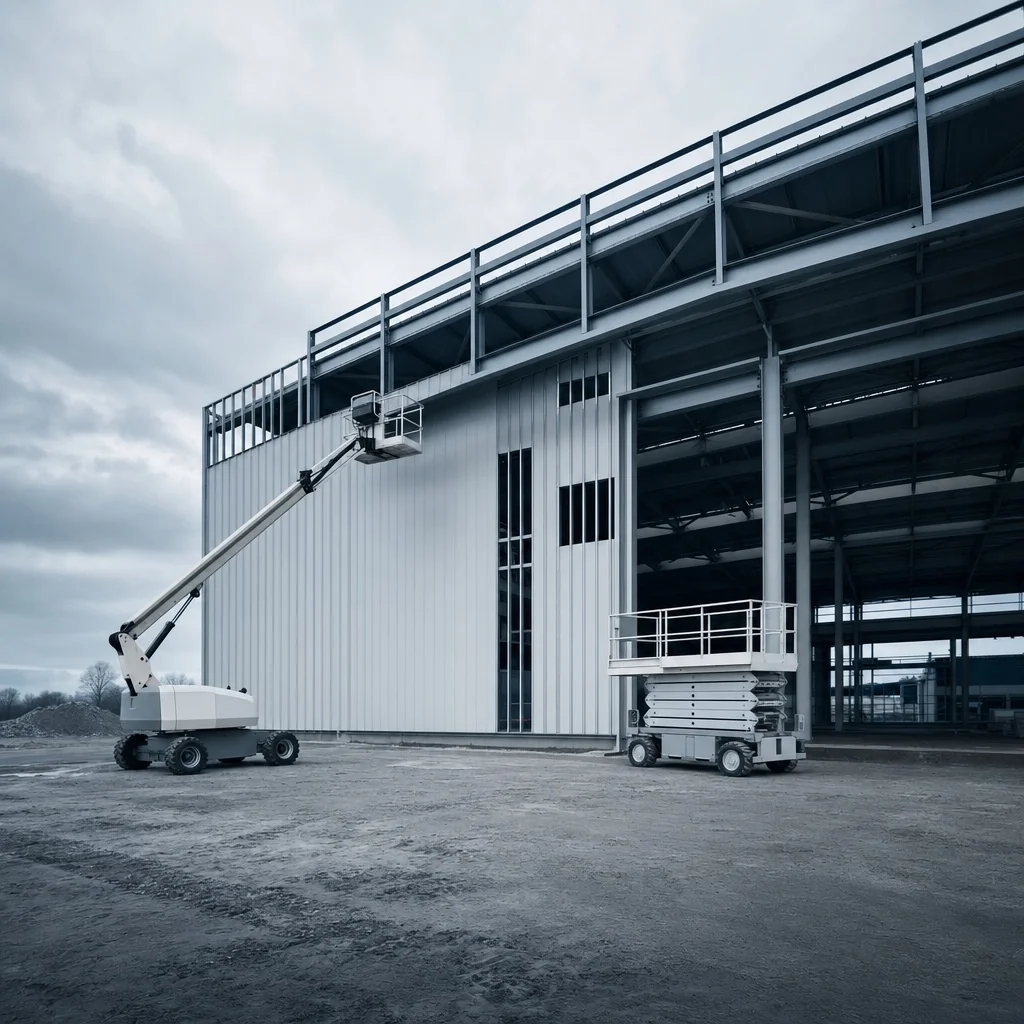
- Rough-terrain scissor lifts: Suited to construction pads, utility work, and uneven ground typical after precipitation. Tire type and leveling features address variable surfaces. See /rough-terrain-scissor-lift-rental/.
Boom lifts: outreach around obstructions
- Articulating boom lifts: Navigate over canopies, conveyors, or façade projections common in redevelopment. See /articulating-boom-lift-rental/.
- Telescopic boom lifts: Favor long, straight reaches on open sites like laydown yards or exterior steel work. See /telescopic-boom-lift-rental/ and /boom-lift-rental/.
Vertical access in tight spaces
- Vertical mast lifts: Fit through standard doors and narrow aisles for light maintenance in warehouses and tech spaces. See /vertical-mast-lift-rental/.
Material handling to the work face
- Forklifts: Manage pallets on slabs and dock areas with predictable turning space. See /forklift-rental/.
- Telehandlers: Move loads across uneven ground or set materials to elevated decks on variable subgrade. See /telehandler-rental/.
Site products that shape the job
- Generators and light towers: Support night shifts and temporary power in yards and interior build-outs. See /generators-light-towers-rental/.
- Storage containers: Secure tools and materials close to the work while keeping aisles clear. See /storage-containers-rental/.
- Temporary fencing and barricades: Define perimeters, gates, and pedestrian routes around active equipment. See /temporary-fencing-barricades-rental/.
Local conditions that change the comparison
Frequent precipitation and freeze-thaw cycles can soften ground on exterior projects, pushing choices toward rough-terrain platforms and telehandlers. Inside local distribution buildings, smooth floors, narrow aisles, and racking heights favor compact electric scissors and vertical masts. Access routes—dock doors, alleys, or gravel drives—often decide maximum machine width and turning radius before height or capacity.
Procedures and instructions govern
All elevated and exterior tasks depend on actual site conditions, the selected unit’s instructions, and site procedures. Confirm measurements, surfaces, and route constraints before finalizing categories.